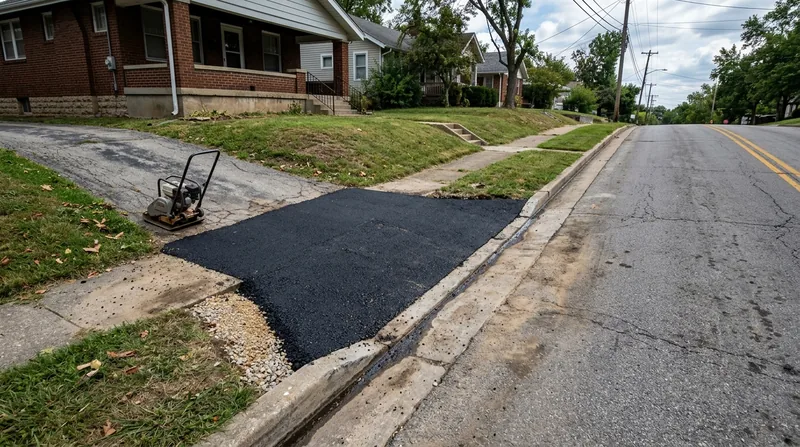




The historic neighborhoods near downtown Columbia, along with the sprawling mid-century subdivisions and fast-growing residential developments on the south and east sides of Boone County, all face the same driveway problem: freeze-thaw cycles working on silty clay loam, combined with the sloped streets toward the river bluffs, push existing driveways to their limits. When a short, steep apron near the street begins to crack and settle, or when a single-car driveway needs to accommodate two vehicles, driveway extensions, widening and aprons become the practical answer. We remove the failing edge, extend the pad with a properly compacted asphalt base and surface course, and tie it in with a butt joint that holds through the next ten years of Missouri winter. The result is a wider, longer driving surface that sits level and sheds water, not a patchwork of repairs that will need doing again in two seasons.
Why Driveway Extensions and Widening Matter in Columbia's Residential Market
Columbia's housing stock tells the story. Student rental properties near the University of Missouri sit on narrow lots with short aprons that take a beating from turnover traffic and parked cars. Established neighborhoods further out feature single-car driveways that were adequate in 1965 but are now too tight for two vehicles. The newer subdivisions on the south side have wider lots, but even there, the rolling terrain and heavy freeze-thaw action mean that the original apron often settles or cracks within fifteen to twenty years. When the street edge fails or when you need to park a second vehicle off the pavement, extending or widening the pad is faster and cheaper than full replacement, and it addresses the actual wear pattern.
- Short, steep aprons near downtown settle under repeated freeze-thaw cycles and heavy parking pressure, making extension a practical repair choice.
- Single-car driveways in mid-century subdivisions gain a second parking bay when extended, eliminating street parking and improving property appeal.
- Wider pads shed water more efficiently and distribute vehicle weight more evenly, reducing edge cracking and base failure.
- Extensions with proper compaction and butt joints outlast patching because they address the root cause, not just the symptom.
The key is that extension work must be done right: the existing edge is removed, the base is prepped and proof-rolled, and the new asphalt is bonded and compacted to the same density as the original pad.
Local example: A 1970s ranch on a steep street in the Ridgemont neighborhood had a cracked three-by-fifteen apron with the street edge starting to collapse. Rather than tear out and replace the whole driveway at $4,500, we removed the failing edge, extended it four feet toward the street, and widened it by two feet on the side, adding 120 square feet of new surface. The homeowner gained safer parking and a level platform that will hold for a decade, at a fraction of full replacement cost.
Before you hire any contractor, check with the City of Columbia Building and Development Services to confirm whether your extension requires a permit. Some municipalities require permits for apron work, especially if it affects the curb or stormwater drainage. You will also need to verify that Missouri 811 has located utilities before any excavation begins. If your property is in an HOA community, review the architectural guidelines to ensure asphalt is permitted and that the extension meets setback and finish standards.
How We Extend and Widen Driveways: Our Process in Columbia
Extension and widening work starts with a site visit to measure the pad, assess the existing base, and understand what the terrain and drainage require. We map out the new edge, call for a Missouri 811 utility locate, and prepare the site. The old failing edge is removed and disposed of, the base is graded and compacted, and the new asphalt is laid in binder and surface courses, bonded to the existing pad with a butt joint that sits flush and holds under traffic. The entire edge is proof-rolled to ensure proper compaction, and the surface is finished smooth and ready to drive on.
- We measure the existing driveway and the proposed extension, confirm local permitting requirements, and call for a utility locate before any work begins.
- The failing edge or the area to be widened is excavated and removed, and the base is graded level and compacted with a vibratory roller.
- New asphalt binder course is laid and compacted, then the surface course is applied and finished to match the existing slope and texture.
- The edge is proof-rolled to verify density, and the surface is inspected for smoothness and proper drainage before the job is complete.
The entire job typically takes one to two days depending on the size of the extension and the weather. New asphalt must cure for six to twelve months before sealing, so plan your maintenance schedule accordingly. For more information on driveway repair and resurfacing options, see our driveway repair page.
Real scenario: A homeowner on a steep lot in South Columbia had a two-car driveway that was cracking at the lower edge due to water runoff and settlement. Rather than resurface the entire forty-by-twenty pad, we removed the lower six feet, reset the base with improved drainage, and laid new asphalt with a slightly steeper slope to shed water faster. The cost was under $2,200, and the driveway is now level and safe to park on.
| Approach | Description | Best for |
|---|---|---|
| Edge removal and extension | Remove the failing apron or edge, reset the base, and extend the pad with new asphalt bonded to the existing surface. | Settling aprons, street-edge cracking, adding a few feet toward the street or sidewalk. |
| Side widening | Excavate and grade the side of the existing driveway, lay new asphalt binder and surface, and butt-joint to the existing pad. | Adding a parking bay, widening a single-car drive to two cars, improving water drainage on the edge. |
| Full-length extension | Extend the driveway toward the street or garage by removing the old edge, prepping the base, and laying new asphalt the full width of the pad. | Adding parking depth, creating a landing pad at the garage, improving sight lines at the property line. |
| Combined extension and widening | Remove and extend the apron while also widening one or both sides, creating a larger, more functional pad with a single compaction cycle. | Older driveways that are too short and too narrow, where two separate jobs would waste time and money. |
Driveway Extensions, Widening and Aprons Cost in Columbia: What to Expect
A basic extension or widening in Columbia typically starts at $1,800 to $2,400 for a modest job: removing and extending a failing apron by four to six feet, or widening an existing single-car drive by two to three feet. The final cost depends on how much of the pad needs to be removed, the condition of the base, whether drainage improvements are needed, and whether the site is easy to access with equipment. A larger project that extends and widens the entire driveway, or that requires significant base work due to settlement or poor drainage, will cost more. The best approach is to get a free on-site estimate, where we measure the pad, assess the base, and give you a firm price before any work begins.
Factors that affect the cost include the square footage of new asphalt, the depth of excavation required, whether the existing base can be reused or must be replaced, site access for equipment, and the slope of the terrain. If the extension requires a municipal permit or a stormwater management plan, that adds time and cost, so confirm local requirements early. For more detailed pricing on related services, see our pricing overview.
Driveway Extensions, Widening and Aprons Near Me: What Columbia Homeowners Should Know When Hiring a Contractor
Choosing the right contractor for driveway extension work is about more than price. You want someone who is verifiably local, who will give you a written estimate with tonnage and thickness specs, and who understands the local terrain and freeze-thaw challenges that affect asphalt in Columbia. We have been serving Greater Columbia since 2015, and we operate from a local address with local equipment and crews. Before you hire any contractor, verify that they are fully insured and ask to see a certificate of insurance. Check references from recent jobs in your area, and make sure the contractor understands whether your project requires a municipal permit or HOA approval.
- Confirm that the contractor is fully insured and ask for proof of coverage that includes general liability and property damage.
- Get a written estimate that specifies the square footage of new asphalt, the thickness of each course, and the tonnage of material to be used.
- Ask for references from at least two recent extension or widening jobs in Columbia or a nearby city, and follow up with those homeowners.
- Verify that the contractor will call Missouri 811 for a utility locate before any excavation, and confirm that local permitting has been addressed.
- If your property is in an HOA community, make sure the contractor understands the architectural guidelines and will coordinate with your HOA before starting work.
Beware of unsolicited door-to-door offers, especially from contractors with out-of-state plates who claim to have leftover asphalt from a nearby job. Legitimate contractors work by referral and reputation, provide written contracts, and do not ask for large cash deposits before the work is done. If a price seems too good to be true, it usually is. For a free estimate from Columbia Asphalt Paving, call (573) 488-6542 or fill out our contact form. We respond within 24 hours, and there is no obligation to book.
Driveway Extensions, Widening & Aprons in Columbia: Pricing Guide
| Service | Price | Details |
|---|---|---|
| Basic apron extension or widening | Starting at $1,800 | Four to six feet of extension or two to three feet of widening, includes base prep, new asphalt, and compaction |
| Moderate extension and widening combo | Starting at $2,400 | Extending and widening the same driveway, or larger apron work, includes base evaluation and drainage assessment |
| Large or complex extension | On estimate | Full-length extension with significant base work, settlement repair, or extensive drainage improvements require site visit |
| Travel and site visit | Included | No mileage charge or call-out fee within Columbia and surrounding service area |
| Free estimate | No charge | Written estimate with tonnage and thickness specs, twenty-four-hour response at (573) 488-6542 |
Indicative pricing, the exact cost depends on square footage, finish, and site access. Free personalized estimate within 24h at (573) 488-6542.


