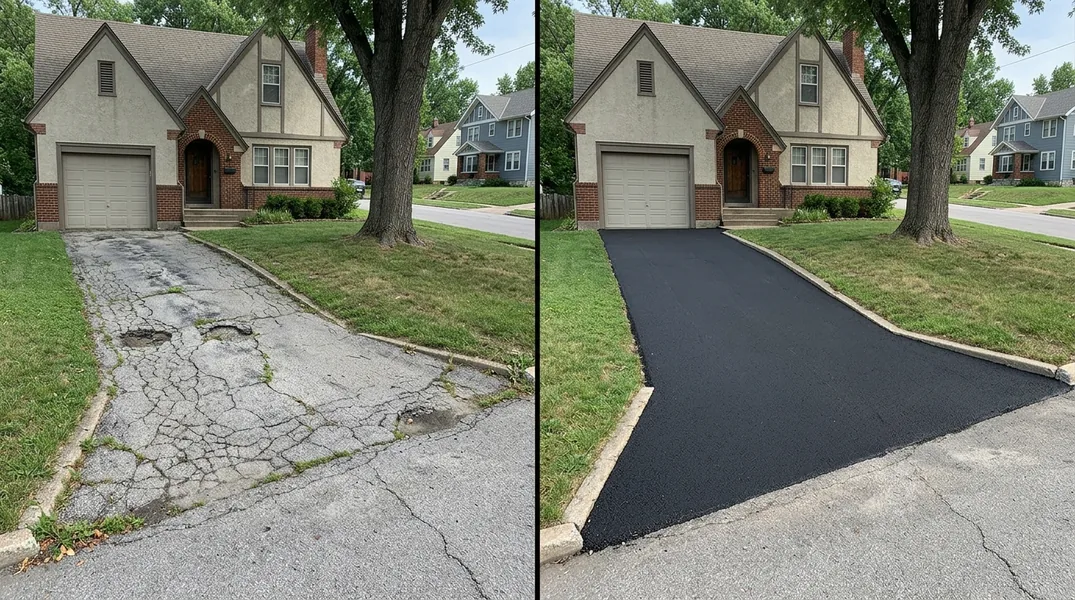
Understanding Asphalt Driveway Lifespan in Columbia's Climate
If you own a home in Columbia, you've likely experienced the harsh reality of Midwest winters. The freeze-thaw cycle that defines our climate is one of the biggest challenges for asphalt driveways, and understanding how it affects your pavement is essential for planning maintenance and budgeting for replacement.
The typical asphalt driveway lifespan ranges from 15 to 20 years under ideal conditions. However, in Columbia, where temperatures regularly dip below freezing during winter months and then warm up significantly in spring, that timeline can be considerably shorter. The constant expansion and contraction of asphalt caused by temperature fluctuations accelerates wear and tear, leading many homeowners to need repairs or replacement sooner than expected. Understanding these regional factors helps you make informed decisions about your driveway's future and avoid costly surprises.
The Freeze-Thaw Cycle: Your Driveway's Biggest Enemy
The freeze-thaw cycle is particularly damaging to asphalt because of how the material responds to temperature changes. When water seeps into small cracks in your asphalt and freezes, it expands. This expansion pushes outward on the pavement, widening the cracks further. When temperatures rise and the ice melts, the asphalt contracts, leaving behind larger gaps and weakened areas. Over many freeze-thaw cycles throughout a single winter season, this process compounds, creating a deteriorating surface that's vulnerable to potholes, alligator cracking, and structural failure.
In Columbia, where winter temperatures can swing 30 to 40 degrees Fahrenheit in a single day, this cycle happens frequently and intensely. A driveway that might last 20 years in a milder climate may only last 12 to 15 years here. This reality makes preventative maintenance and timely Driveway Repair essential investments for any homeowner wanting to extend their pavement's life.
Key Factors That Affect How Long Your Asphalt Driveway Lasts
Several variables influence the actual longevity of your asphalt driveway beyond just climate. The quality of the original Asphalt Driveway Paving & Installation work plays a significant role. Driveways installed with proper compaction, correct asphalt mix design, and adequate base preparation will last considerably longer than those cut corners. Additionally, the thickness of your asphalt layer matters. Most residential driveways should be at least 2 to 3 inches thick, but thinner applications are more susceptible to cracking and deterioration.
Maintenance habits are equally important. A driveway that receives regular seal coating, prompt crack filling, and proper drainage will significantly outperform one that's neglected. Water is asphalt's enemy, and allowing standing water or allowing moisture to penetrate through cracks accelerates damage exponentially. Traffic volume and the weight of vehicles also impact lifespan. A driveway used only for light residential traffic will last longer than one subjected to heavy commercial use or frequent heavy vehicle parking. Finally, sun exposure and UV rays gradually oxidize asphalt, making it more brittle and prone to cracking, so driveways in full sun may deteriorate faster than those with tree shade.
Warning Signs It's Time to Replace Your Asphalt Driveway
Knowing when to replace your driveway is crucial for safety and preventing more expensive structural damage. If your driveway shows extensive alligator cracking (a pattern resembling the skin of an alligator), large potholes that keep reappearing despite repairs, or widespread surface deterioration covering more than 30 percent of the pavement, replacement is likely your best option. Additionally, if your driveway is sinking, heaving, or showing signs of base failure, patching won't solve the underlying problem.
You might also consider Asphalt Resurfacing & Overlay as a middle-ground option if the base is still sound but the surface is worn. This approach is often more affordable than full replacement and can add 7 to 10 years to your driveway's life. However, if the base has failed or your driveway is older than 15 to 18 years and showing multiple signs of distress, full replacement is typically the more economical long-term solution. The best way to determine your driveway's condition is to have a professional inspection. Contact Columbia Asphalt Paving at (573) 488-6542 to discuss your specific situation and get expert guidance on whether repair, resurfacing, or replacement is right for you.
Extending Your Driveway's Life: Maintenance Tips for Columbia Homeowners
Preventative maintenance is the most cost-effective way to maximize your asphalt driveway's lifespan. Seal coating your driveway every 2 to 3 years creates a protective barrier against water, UV rays, and oxidation. This relatively inexpensive treatment can add several years to your driveway's life and is particularly important in Columbia's harsh climate. Addressing cracks promptly is equally important. Small cracks can be sealed for minimal cost, but if left untreated, they expand during freeze-thaw cycles and eventually require expensive Pothole Repair & Asphalt Patching.
Proper drainage is another critical factor. Ensure water flows away from your driveway and doesn't pool on the surface. Clear debris, leaves, and dirt regularly, as these materials trap moisture against the pavement. During winter, avoid using salt-based ice melts when possible, as they accelerate deterioration. Instead, use sand or calcium chloride products that are less damaging to asphalt. Finally, avoid parking heavy vehicles in the same spot repeatedly, as concentrated weight can cause premature wear and depression. By following these maintenance practices, many homeowners can extend their driveway's life by 5 to 10 years, delaying the need for costly replacement.
Asphalt Driveway Paving & Installation Cost in Columbia: What to Budget
Understanding the financial commitment required for driveway work helps you plan ahead. New Asphalt Driveway Paving & Installation typically costs between 3 to 5 dollars per square foot, though this varies based on site conditions, local labor rates, and material costs. For a standard 2-car driveway of about 600 square feet, you can expect to invest between 1,800 to 3,000 dollars for a quality installation. Seal coating runs considerably less, usually between 0.15 to 0.25 dollars per square foot, making it an affordable maintenance option.
Crack filling and small repairs are even more budget-friendly, typically costing 100 to 500 dollars depending on the extent of damage. Asphalt Resurfacing & Overlay falls in the middle, generally costing 1.50 to 3 dollars per square foot. When comparing costs, remember that investing in preventative maintenance now saves significantly on major repairs later. For a detailed assessment of your driveway's condition and an accurate estimate tailored to your specific needs, request a free estimate from Columbia Asphalt Paving, or call (573) 488-6542 to speak with our team directly.
Looking for a professional asphalt paving contractor in Columbia? Columbia Asphalt Paving responds fast for all your asphalt paving needs.
Get a Free Quote