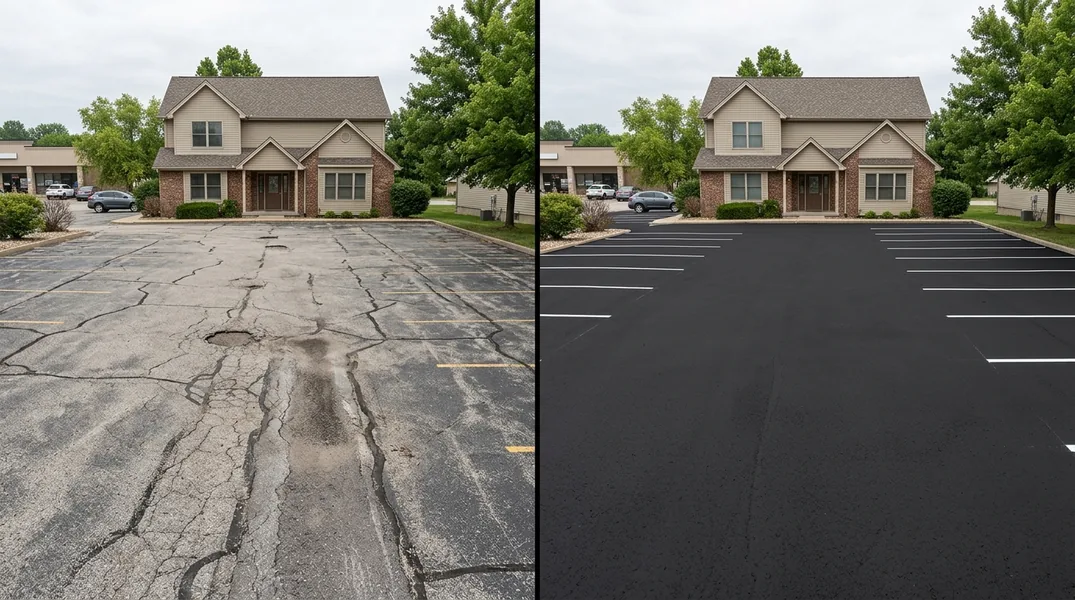
The Drainage Challenge in Columbia's Older Subdivisions
If you own a mid-century ranch home in one of Columbia's established neighborhoods, you've likely noticed that your driveway doesn't drain quite like newer installations do. Many of these charming homes, built between the 1940s and 1970s, came with driveways that were designed with minimal slope and little consideration for modern stormwater management. Over the decades, soil settling, tree root growth, and the natural wear of freeze-thaw cycles have only made the problem worse.
Water pooling on driveways is more than just an aesthetic nuisance. Standing water accelerates asphalt deterioration, creating cracks that allow moisture to penetrate deeper into the base layers. In Columbia's climate, where spring rains and winter snowmelt are common, this moisture becomes a serious threat. When water seeps beneath the surface and freezes, it expands, lifting and cracking the asphalt from below. This cycle repeats year after year, turning a minor drainage issue into a costly structural failure. Understanding these challenges is the first step toward protecting your property and avoiding expensive repairs down the road.
Why Water Pooling on Your Driveway Matters More Than You Think
Water pooling on driveway surfaces might seem like a minor inconvenience, but it's actually a leading cause of premature asphalt failure. When water sits on your driveway instead of flowing away, it doesn't just create puddles you have to step around. That standing water is actively working to break down your asphalt. The moisture penetrates micro-cracks and seeps into the base layers, where it weakens the structural integrity of the entire system. In older subdivisions where original drainage was inadequate, this problem compounds over time as the asphalt ages and becomes more porous.
Beyond structural damage, water pooling creates safety hazards. Puddles can hide potholes or soft spots that damage vehicles. In winter, standing water freezes and creates slipping hazards. Mosquitoes breed in stagnant water during warm months. For homeowners in Columbia looking to maintain property values and curb appeal, poor drainage is a visible sign of neglect that potential buyers immediately notice. Addressing drainage during a resurfacing project isn't just about extending asphalt life, it's about protecting your entire investment and maintaining safety for your family and visitors.
Driveway Drainage Solutions: From French Drains to Trench Drains
Modern Asphalt Driveway Paving & Installation projects incorporate sophisticated drainage systems that simply didn't exist when your mid-century ranch was built. A driveway french drain is one of the most effective solutions for older properties. This system uses a perforated pipe buried beneath or alongside the driveway, surrounded by gravel, to intercept and redirect subsurface water away from the asphalt. The pipe slopes gently downhill, allowing gravity to move water naturally toward a drainage outlet or dry well. For homes in older subdivisions where the surrounding grade may be problematic, a french drain system can be customized to work with your property's unique topography.
Another popular option is a trench drain driveway system, which is essentially a surface-level channel that runs along the edge or across the driveway to capture and direct water away. Unlike french drains that work below ground, trench drains are more visible but often easier to install and maintain. They're particularly useful on flat or low-slope driveways where water naturally wants to pool. When you're planning Asphalt Resurfacing & Overlay work on an older property, a professional contractor can assess your specific situation and recommend whether a french drain, trench drain, or combination approach will work best. The key is ensuring that water is directed away from your driveway and home foundation, preventing the pooling that causes so much damage.
The Resurfacing Process: Addressing Root Causes While Improving Drainage
When Columbia Asphalt Paving approaches a resurfacing project on a mid-century ranch property, we don't simply overlay new asphalt over old problems. A proper resurfacing process begins with a thorough inspection to identify drainage issues, soft spots, and structural weaknesses. If water pooling has been a chronic problem, we evaluate the existing grade and base layers to understand why water isn't flowing properly. Often, the original driveway was constructed with inadequate slope, or decades of settling have created low spots that trap water. Our team removes damaged sections, corrects the slope to ensure positive drainage, and rebuilds the base with proper compaction and material selection.
Once the foundation is properly prepared, we install appropriate driveway drainage solutions before laying new asphalt. This might include adjusting the crown (the slight peak down the center of the driveway that helps water run off to the sides), installing edge drains, or incorporating a complete french drain or trench drain system. The new asphalt is then applied in proper lifts, with attention to slope and surface texture that promotes water runoff. This comprehensive approach means that when your resurfaced driveway is complete, it not only looks new but actually functions better than the original installation. You'll notice water flowing away naturally rather than pooling, and you'll have the confidence that your driveway is built to handle Columbia's weather patterns for decades to come.
Cost Considerations for Drainage-Focused Driveway Resurfacing
Homeowners often ask about the additional cost of incorporating proper driveway drainage solutions into a resurfacing project. The honest answer is that adding drainage does increase the initial pricing, but it's an investment that pays dividends in extended driveway life and reduced future repairs. A basic overlay might be the cheapest option upfront, but if water pooling returns within a few years, you'll find yourself paying for repairs or another resurfacing sooner than expected. By contrast, a resurfacing project that includes proper grading and drainage infrastructure typically extends your driveway's useful life by five to ten years or more, making it the more economical choice over time.
The specific cost depends on several factors: the extent of existing damage, the type of drainage system needed, the size of your driveway, and your property's unique grading challenges. A simple french drain might add several hundred dollars to a resurfacing project, while a more comprehensive system with trench drains and significant grading work could add more. Rather than guessing, the best approach is to request a free estimate from a local contractor who can evaluate your specific situation. Columbia Asphalt Paving can assess your driveway, identify drainage issues, and provide transparent pricing that reflects the actual work needed. Call us at (573) 488-6542 to discuss your project and understand exactly what you're investing in.
Protecting Your Mid-Century Home: When to Schedule Resurfacing
If you live in one of Columbia's older subdivisions and you've been dealing with water pooling, frequent puddles, or visible cracks in your driveway, now is the time to consider resurfacing. The longer you wait, the more damage water infiltration causes to the base layers beneath your asphalt. What starts as a surface-level problem becomes a structural issue that's far more expensive to fix. Additionally, if your driveway is showing signs of alligator cracking (a pattern of interconnected cracks), significant potholes, or widespread deterioration, Driveway Repair alone won't solve the problem. A full resurfacing with proper drainage correction is the appropriate solution.
The ideal time to address these issues is during spring or early fall when weather conditions are favorable for asphalt work. This gives you the full summer or winter season to observe how your newly resurfaced driveway performs before extreme weather arrives. If you're uncertain whether your driveway needs resurfacing or just repairs, contact Columbia Asphalt Paving for a professional assessment. We'll walk you through your options, explain the drainage challenges specific to your property, and help you make an informed decision. Your mid-century ranch deserves a driveway that's both beautiful and functional, and modern drainage solutions make that possible. Reach out to us at (573) 488-6542 or visit our website to schedule your free estimate today.
Looking for a professional asphalt paving contractor in Columbia? Columbia Asphalt Paving responds fast for all your asphalt paving needs.
Get a Free Quote